


Legal malpractice is a serious issue that can have lasting consequences for individuals who rely on attorneys to protect their legal interests. When people hire a lawyer, they do so with the expectation that their case will be handled competently, ethically, and with due care. Attorneys are entrusted with sensitive information, important deadlines, and decisions that may significantly impact a client’s financial stability, personal well-being, and future.
Unfortunately, attorneys do not always meet these expectations. When a lawyer fails to uphold professional or ethical standards and causes harm to a client, legal malpractice may occur. Despite its seriousness, legal malpractice is often misunderstood. Many clients are unsure of what qualifies as malpractice, how to recognize the warning signs, or what steps to take if they believe they have been harmed.
This article provides a comprehensive explanation of legal malpractice, including its definition, common warning signs, the essential elements of a legal malpractice claim, and practical steps clients can take to prevent becoming victims. It also explores how legal malpractice cases are handled and what options may be available to those seeking accountability and compensation.
Legal malpractice occurs when an attorney fails to perform their duties according to the professional standards expected in the legal field, resulting in harm to a client. Attorneys are required to act competently, communicate effectively, follow ethical rules, and represent their clients with diligence and loyalty. A breach of these obligations may give rise to a malpractice claim.
It is important to understand that not every unfavorable outcome is the result of legal malpractice. The law is complex, and even well-prepared attorneys can lose cases due to factors beyond their control. Malpractice arises only when the attorney’s actions or omissions fall below the accepted standard of care and directly cause damage to the client.
Examples of conduct that may constitute legal malpractice include missing filing deadlines, providing incorrect legal advice, failing to prepare adequately, mishandling client funds, or acting in a way that creates a conflict of interest. When such failures result in financial loss or other harm, clients may have grounds for legal action.
Legal malpractice frequently goes unrecognized because clients may not fully understand the legal process or the standards attorneys are expected to follow. Many people assume that a negative outcome is simply part of litigation, rather than a sign of negligence or misconduct.
Additionally, clients often place a great deal of trust in their attorneys and may feel hesitant to question their judgment. Others may fear retaliation, worry about the cost of pursuing another legal matter, or believe that proving malpractice is too difficult.
In some cases, the effects of malpractice do not become apparent until much later. A missed deadline or improperly handled matter may only surface after a claim has been dismissed or an appeal is no longer possible. By that time, the damage may already be significant.
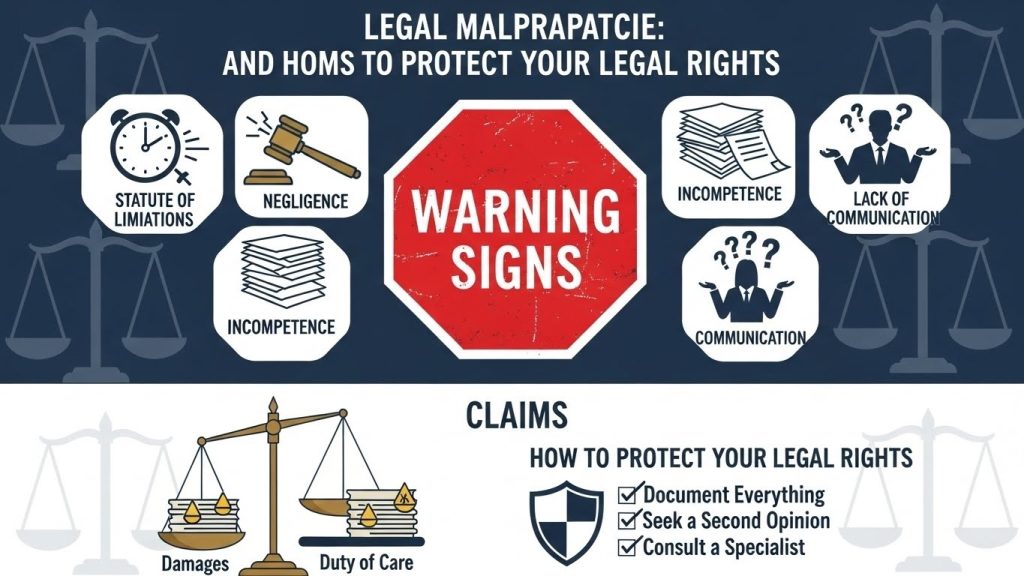
While not all mistakes rise to the level of malpractice, certain warning signs may indicate that an attorney has acted negligently or unethically. Being aware of these red flags can help clients identify potential issues early.
Missing deadlines is one of the most common and serious indicators of legal malpractice. Courts impose strict deadlines for filing documents, responding to motions, and initiating legal actions. Failure to meet these deadlines can result in the dismissal of a case or the permanent loss of legal rights.
If an attorney misses a critical deadline and the client’s case suffers as a result, this may point to negligence.
Attorneys have a duty to keep their clients reasonably informed about the status of their case. Repeatedly failing to return phone calls, ignoring emails, or providing vague or inconsistent information may be cause for concern.
Poor communication can prevent clients from making informed decisions and may signal that the attorney is neglecting the case or attempting to conceal mistakes.
Legal filings must be accurate and complete. Frequent mistakes in paperwork, incorrect legal arguments, or improperly drafted documents can weaken a client’s position and suggest a lack of competence or attention to detail.
While minor errors may occur occasionally, repeated or serious mistakes that affect the outcome of a case may constitute malpractice.
An attorney should be thoroughly prepared for hearings, negotiations, and trials. Signs of inadequate preparation include unfamiliarity with case details, failure to present evidence, or inability to respond effectively to opposing arguments.
A lack of preparation can significantly harm a client’s chances of success.
Attorneys are ethically required to avoid conflicts of interest unless they are fully disclosed and consented to by the client. Representing parties with opposing interests or prioritizing personal gain over a client’s needs can constitute serious misconduct.
If an attorney appears to be favoring another party or has undisclosed relationships affecting the case, this may be a warning sign.
Attorneys must bill clients fairly and transparently. Charges for unnecessary work, unexplained fees, or billing for services not performed may indicate unethical behavior.
Clients have the right to understand how their money is being spent and to question billing practices that seem unreasonable.
Legal malpractice can occur in virtually any area of law. Some of the most common types include:
Each of these actions can have serious consequences and may form the basis of a malpractice claim.
To succeed in a legal malpractice claim, a client must generally prove several key elements. While specific requirements may vary by jurisdiction, the following elements are commonly required.
The first element is the existence of an attorney-client relationship. This relationship establishes the attorney’s duty to act in the client’s best interests. Evidence may include written agreements, payment records, correspondence, or conduct demonstrating that legal services were provided.
Without an attorney-client relationship, a malpractice claim typically cannot proceed.
The client must show that the attorney breached their duty by failing to meet the standard of care expected of a reasonably competent attorney in similar circumstances. This may involve negligence, lack of skill, or unethical behavior.
Expert testimony is often used to establish what the standard of care was and how the attorney’s conduct deviated from it.
Causation is often the most challenging element to prove. The client must demonstrate that the attorney’s breach directly caused the harm suffered. This typically involves showing that the client would have achieved a better outcome if the attorney had acted competently.
This requirement is sometimes referred to as proving a “case within a case.”
Finally, the client must prove that they suffered actual damages as a result of the attorney’s conduct. Damages may include financial losses, lost legal claims, additional legal expenses, or other measurable harm.
Without provable damages, a malpractice claim cannot succeed, even if the attorney acted negligently.
Legal malpractice claims are complex and often difficult to pursue. Attorneys accused of malpractice may argue that their decisions were strategic, that the client’s case was weak, or that external factors caused the unfavorable outcome.
Additional challenges include obtaining expert testimony, meeting strict statutes of limitations, and proving causation. Despite these obstacles, well-documented claims supported by experienced legal counsel can be successful.
While clients cannot eliminate all risks, proactive measures can significantly reduce the likelihood of becoming a victim of legal malpractice.
Researching an attorney’s qualifications, experience, and reputation is essential. Clients should ask questions about prior experience, communication practices, and case strategy before hiring legal representation.
Clear communication from the beginning can help prevent misunderstandings. Clients should understand the scope of representation, fee arrangements, and anticipated timelines.
Written agreements should be reviewed carefully before signing.
Clients should remain actively engaged in their case. Requesting updates, reviewing documents, and asking questions can help ensure transparency and accountability.
Maintaining copies of all correspondence, contracts, invoices, and filings can be invaluable if disputes arise later.
If concerns arise about an attorney’s performance, seeking a second opinion can provide clarity and help determine whether malpractice may have occurred.
Before pursuing litigation, some clients may consider alternative dispute resolution methods such as mediation or arbitration. These approaches can sometimes resolve disputes more efficiently and at a lower cost.
However, not all malpractice cases are suitable for alternative resolution, particularly those involving serious negligence or ethical violations.
Clients who suspect legal malpractice should seek legal advice as soon as possible. Another attorney can review the case, assess potential claims, and explain available options.
Legal representation may include evaluating damages, negotiating settlements, and pursuing litigation if necessary. Experienced counsel can guide clients through the process and advocate for fair compensation.
Compensation in legal malpractice cases may include recovery for:
The goal is to place the client in the position they would have been in had the malpractice not occurred.
Legal malpractice claims are subject to strict time limits that vary by jurisdiction. These limits may begin when the malpractice occurs or when the client discovers the harm.
Failing to act within the applicable timeframe can result in the loss of the right to seek compensation, making prompt action essential.
Beyond financial losses, legal malpractice can cause significant emotional distress. Clients may experience frustration, anxiety, and a loss of trust in the legal system.
Acknowledging these impacts is important, and pursuing accountability can help restore confidence and provide closure.
Legal malpractice claims play an important role in maintaining professional standards within the legal system. Holding attorneys accountable helps protect clients and reinforces ethical conduct throughout the profession.
Legal malpractice is a complex and serious issue that can have far-reaching consequences. Understanding the warning signs, legal requirements, and available options empowers clients to protect their rights and make informed decisions.
By staying vigilant, choosing legal representation carefully, and seeking advice when concerns arise, individuals can reduce the risk of malpractice and take appropriate action if it occurs. Being informed is the first step toward safeguarding one’s legal interests.

Lorem Ipsum is simply dummy text of the printing and typesetting industry. Lorem Ipsum has been the industry's standard dummy text ever since the 1500s, when an unknown printer took a galley of type and scrambled it to make a type specimen book. It has survived not only five centuries, but also the leap into electronic typesetting.
Lorem Ipsum is simply dummy text of the printing and typesetting industry. Lorem Ipsum has been the industry's standard dummy text ever since the 1500s, when an unknown printer took a galley of type and scrambled it to make a type specimen book. It has survived not only five centuries, but also the leap into electronic typesetting.
Lorem Ipsum is simply dummy text of the printing and typesetting industry. Lorem Ipsum has been the industry's standard dummy text ever since the 1500s, when an unknown printer took a galley of type and scrambled it to make a type specimen book. It has survived not only five centuries, but also the leap into electronic typesetting.
Lorem Ipsum is simply dummy text of the printing and typesetting industry. Lorem Ipsum has been the industry's standard dummy text ever since the 1500s, when an unknown printer took a galley of type and scrambled it to make a type specimen book. It has survived not only five centuries, but also the leap into electronic typesetting.


Reach out to us and we’ll get back to you as soon as possible.


